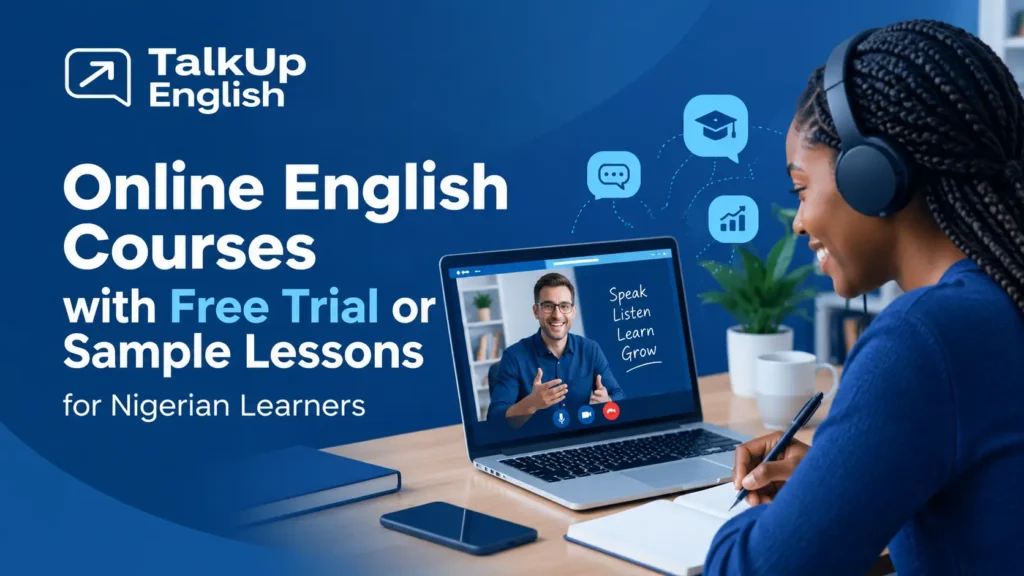
Online English courses with free trial Nigeria options help you assess lesson quality, teaching style, and course level before you pay. You can start with free resources, sample lessons, or a short trial, then choose structured tuition that matches your goals, budget, and current English ability.
Why Learning English Free Is Possible, but Has Limits
You can make real progress with free English resources, especially in reading, vocabulary, grammar, and listening. Websites, audio lessons, dictionaries, and video tutorials provide explanations and practice without tuition fees. Consistent study can help you build a foundation from A1 beginner level towards A2 and B1.
Free resources usually rely on self-study. You choose the material, check answers yourself, and decide when to practise. This approach suits disciplined learners, but it may not reveal repeated speaking errors or help you respond naturally in conversation. Spoken fluency needs active practice, useful feedback, and regular opportunities to speak.
Understand the difference between free and freemium learning. Truly free resources provide access without requiring a subscription for core lessons. Freemium services offer basic activities at no cost but reserve features for paying users. A free trial gives temporary access to a paid course, so check its duration, cancellation rules, and renewal price before registering.
What to Check in an Online English Course Trial
A trial lets you test the learning experience before you commit. Check these five features:
- Level assessment: A placement test should estimate your current ability and recommend suitable lessons.
- Lesson structure: Confirm that lessons cover grammar, vocabulary, listening, reading, pronunciation, and speaking in a clear sequence.
- Teacher feedback: Find out whether someone corrects your errors and explains how to improve them.
- Access and schedule: Check class times, device requirements, data use, and whether lessons are live or recorded.
- Costs and conditions: Confirm the trial length, payment details, renewal date, and cancellation process.
Free English Language Learning Resources Online
Grammar, Reading, and Vocabulary
A dictionary helps you check definitions, word forms, example sentences, and audio pronunciation. Listen to both British English pronunciation and American English pronunciation when the distinction matters for your goals. Do not memorise isolated word lists alone; learn useful phrases and idioms in context so you understand how speakers use them naturally.
Listening Practice with Videos and Podcasts
Online video channels provide free explanations of grammar, everyday phrases, pronunciation, and conversation. Select lessons with clear speech, subtitles, and transcripts where available. Watch a short clip once for the main idea, then replay it to identify unfamiliar phrases. Finally, pause and repeat complete sentences aloud.
Podcasts for listening practice help you understand English without visual clues. Start with short episodes and topics you already know. Listen once without a transcript, write down the main points, and listen again while checking the transcript. This routine trains listening comprehension and helps you notice connected speech, stress, and common expressions.
Reading and Listening by Level
The Common European Framework of Reference for Languages (CEFR) describes ability from A1 to C2. At A1, focus on familiar words and simple questions. At A2, practise routine exchanges and short descriptions. At B1, work with clear everyday content and explain opinions. At B2, handle more complex texts and discussions. At C1, practise detailed, flexible communication for demanding academic or professional situations.
Choose material that challenges you without making every sentence difficult. If you understand almost nothing, select an easier level. If you understand everything immediately, choose more demanding content. A free placement test can help you begin at an appropriate level and avoid spending time on lessons you have already mastered.
Free English Courses Online: What to Expect
Free courses generally fall into three categories. Fully free courses provide lessons and exercises without a subscription. Freemium courses provide basic content but restrict selected lessons or features. Trial-based courses offer temporary access to paid teaching, which may include live sessions, progress checks, or personalised feedback.
Check what the offer includes before you sign up. A page that advertises a free lesson may provide only one introductory session, while a free trial may unlock a wider course for a limited period. Neither option automatically means that every service remains free. Read the terms and record the end date so you can make an informed decision.
Are Free English Courses with Certificates Valuable?
A free certificate can document course completion, but it does not always prove professional English proficiency. Its value depends on the issuing organisation, assessment method, and purpose. A completion certificate may support your personal learning record or show initiative to an employer, but official university, immigration, or professional requirements may demand a recognised test result.
Free English Classes Online: Live vs Pre-Recorded
Live classes give you speaking practice and direct feedback; pre-recorded lessons offer flexibility and self-paced review. Recorded lessons work well when you need to revisit grammar explanations, pause difficult sections, or study outside fixed class times. However, watching a lesson does not confirm that you can use the language in a real conversation.
A live class asks you to listen, respond, ask questions, and explain your ideas. A teacher can correct pronunciation, grammar, and word choice during the session. Group classes can help you practise with other learners, while private lessons can focus on your personal goals. Confirm class size, teacher qualifications, lesson length, and the amount of speaking time before choosing.
How to Study English Free Effectively: A 30-Day Plan
A 30-day plan helps you turn free resources into a consistent study routine. Aim for 20 minutes daily, then increase the time when your schedule allows. Regular practice is more useful than occasional long sessions without review.
Week 1: Assess Your Level and Set Goals
Take a placement test and choose one practical goal, such as introducing yourself confidently, understanding workplace instructions, or writing a clear email. Select learning materials at your current level and set a daily study time. Record your starting strengths and the skills that need the most attention.
Week 2: Build Vocabulary and Grammar
Learn five new words each day and write one sentence with each word. Review the words from previous days before adding new ones. Complete a short grammar exercise and correct every mistake. Focus on words and structures that support your personal, academic, or professional needs.
Week 3: Practise Listening and Reading
Listen to one short audio lesson daily and summarise the main idea in two or three sentences. Read a level-appropriate text and answer comprehension questions. Replay difficult sections, use transcripts to identify missed words, and note useful phrases for later speaking practice.
Week 4: Speak and Review Progress
Record a one-minute answer to a familiar question each day. Listen for unclear pronunciation, pauses, and grammar errors, then record a second attempt. Practise with a language partner or join a trial class if available. At the end of the month, repeat a level check and compare your performance with your initial notes.
When Free Resources Are Not Enough
Free resources may stop meeting your needs when you understand lessons but struggle to speak accurately and confidently. This often becomes clear at B1 or B2, when you can follow familiar topics but need more precise language for interviews, meetings, presentations, or study.
Structured tuition adds feedback, accountability, and a planned sequence of lessons. A teacher can identify recurring mistakes, set targeted exercises, and help you practise situations relevant to your goals. Choose a course that explains how progress is measured and gives you opportunities to use English, not just watch explanations.
Start Learning English with a Beginner-Friendly Online Course
Are you starting from the basics and looking for a structured way to learn English? The TalkUp English beginners course is an option to explore if you want guided learning instead of relying only on free resources. Review the course content, lesson format, and learning requirements to decide whether it suits your current level and goals.
Try Free English Sample Lessons Before You Enrol
Want to check the teaching style before paying for an English course? Start with free English language lessons from TalkUp English. Use the sample lessons to assess the explanations, lesson level, and relevance to your learning goals. Complete the activities and identify the areas where you may need further guidance before choosing a course.
How to Choose the Right Trial for Your Needs
Choose a trial based on the skill you need to improve and the support the course provides. Use this quick checklist before registering:
- For speaking confidence, choose a live session with direct feedback.
- For grammar review, choose lessons with explanations and marked exercises.
- For flexible study, confirm that recorded lessons remain accessible at convenient times.
- For work or study, check whether the course includes relevant vocabulary and realistic tasks.
- For beginners, confirm that the course starts with simple language and explains new concepts clearly.
Frequently Asked Questions
What are some free online courses with free certificates in Nigeria?
Some online learning platforms provide free course access or completion records, while others charge for certificates. Check the provider’s terms before enrolling. If you need proof of English proficiency for admission or employment, confirm which recognised examinations the receiving institution accepts.
Can I learn English online for free in Nigeria?
Yes, you can learn English online for free in Nigeria through lessons, dictionaries, videos, podcasts, and grammar exercises. These resources help develop reading, vocabulary, and listening skills. To build spoken fluency, add regular conversation practice and seek feedback on recurring mistakes.
Are free trial English courses suitable for beginners in Nigeria?
Yes, free trial English courses can suit beginners in Nigeria when lessons start at the correct level and explain basic grammar clearly. Use the trial to test lesson pace, teacher support, speaking practice, and access requirements before choosing a paid course.