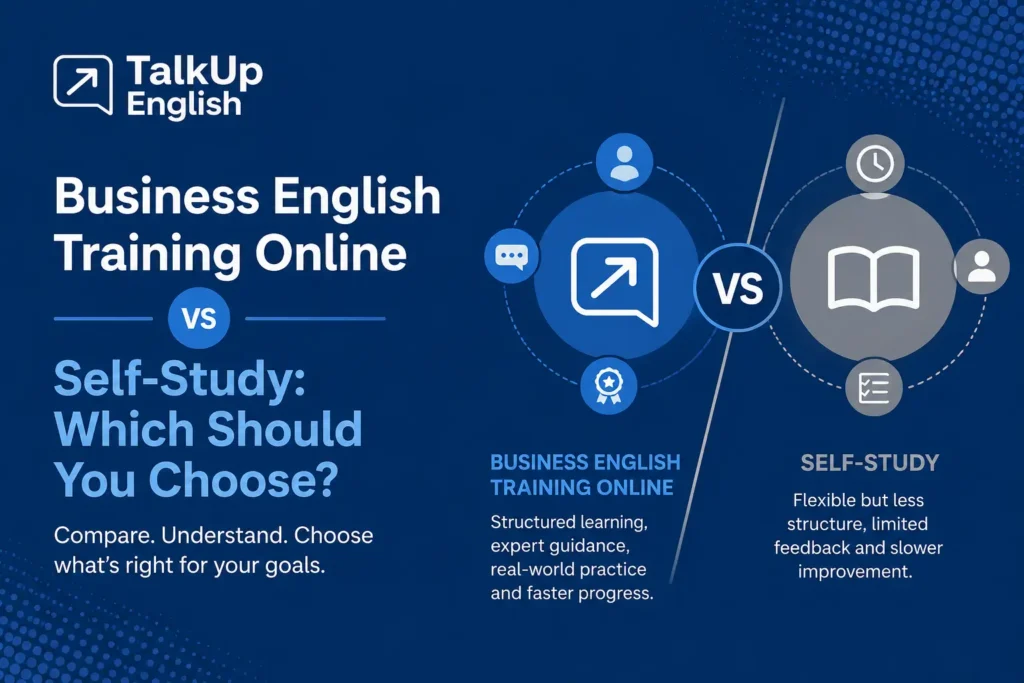
Choosing between online business English training and self-study depends on your current English level, professional goals, budget, and deadline. Choose guided online training if you need feedback, speaking practice, and measurable progress; choose self-study if you already communicate well and mainly need to review grammar or expand vocabulary. Many professionals get the strongest results by combining both methods.
Business English requires more than general vocabulary. You may need to lead meetings, explain data, write emails, negotiate terms, or answer interview questions. Choose a method that helps you perform these tasks, not simply complete lessons.
What Is Online Business English Training?
Online business English training uses live virtual classes, guided lessons, or individual coaching. A teacher or course plan sets objectives and provides activities based on professional situations.
In live sessions, you practise client calls, presentations, interviews, and negotiations. A tutor corrects pronunciation, grammar, word choice, and tone, helping you identify errors you may miss alone.
Guided training can adapt to your role. A finance professional may explain figures, while a technology specialist may describe a product or discuss project risks.
What Is Business English Self-Study?
Self-study uses books, grammar guides, podcasts, videos, vocabulary lists, and self-paced lessons. You choose what to study, when, and for how long.
Self-study suits foundational grammar, reading, business vocabulary, and email conventions. Review the present simple for routine responsibilities and perfect tenses to describe completed projects or professional experience.
Self-study leaves planning, motivation, and progress checks to you. Without a teacher, you may repeat pronunciation or grammar errors. Reading and listening build knowledge but do not guarantee fluent performance in live meetings.
Online Business English Training vs Self-Study: Key Differences
1. Speaking Practice and Feedback
Online training is usually stronger for active speaking. Live role-plays let you practise explaining a proposal, handling objections, or answering unexpected questions. A teacher can correct your wording and help you choose language that sounds clear and professional.
Self-study can support speaking through recordings, audio shadowing, and prompts. Without feedback, however, you may not know whether your pronunciation, tone, or response suits the workplace.
2. Flexibility and Schedule
Self-study offers greater control over your schedule. You can learn before work, during a break, or after hours, and revisit difficult lessons whenever needed. This flexibility helps if your shifts, meetings, or family responsibilities change frequently.
Online training lets you join from different locations, but live sessions require appointments. A fixed schedule helps when you need routine and deadlines.
3. Motivation and Accountability
Self-study requires strong personal discipline. You must set goals, protect study time, and continue when progress feels slow. Without a schedule, it is easy to postpone lessons or spend time on topics that do not support your work goals.
Guided courses provide a plan, deadlines, and teacher contact. Assignments and reviews build accountability before a presentation, interview, or promotion opportunity.
4. Cost and Value
Self-study is often free or low-cost because many learning resources are available online. It is a practical option when your budget is limited or when you need to revise familiar material.
Online training costs more because you pay for instruction, feedback, and course structure. Evaluate the cost against your goal: targeted coaching may be worthwhile when better communication affects client relationships, interviews, or workplace performance. A cheaper option is not better value if it leaves your main speaking problems unresolved.
5. Personalisation and Professional Relevance
Self-study resources often cover broad topics. You can build a vocabulary list, but must decide which phrases fit your role and how to use them.
A guided course can focus on your actual tasks, such as writing reports, leading video calls, presenting results, or negotiating deadlines. The more closely the lessons match your workplace needs, the easier it becomes to apply new language on the job.
A simple way to compare options is to test each method against one real task. If you need to explain a delayed project, check whether the resource teaches suitable phrases, gives you a chance to say them aloud, and helps you identify unclear wording. Choose the method that addresses the gap at work.
Which Option Should You Choose?
Choose the method that matches your biggest learning barrier, rather than selecting solely by price or convenience.
Choose self-study if:
- You already have a solid general English foundation.
- You mainly need to review grammar or learn industry vocabulary.
- You can follow a weekly plan without external reminders.
- Your budget cannot accommodate regular lessons.
Choose online training if:
- You need to speak more confidently in meetings or client calls.
- You want corrections on pronunciation, grammar, and professional tone.
- You need preparation for an interview, presentation, or negotiation.
- You struggle to maintain progress without guidance.
If you are a beginner, structured support can help you build core skills before you rely heavily on independent practice.
Start Your Business English Training Online
If you want structured support to develop workplace vocabulary, professional communication, and practical Business English skills, a dedicated course can give you a clear learning path. The business English course is designed for learners who want focused training instead of relying entirely on self-study.
Explore the course content, lesson format, and learning objectives to determine whether it matches your current English level and professional communication goals.
Can a Hybrid Approach Work Better?
Yes, combining guided training with self-study can balance feedback, flexibility, and cost. Use independent study for short daily tasks, then use live lessons to practise applying the language in realistic professional situations.
For example, learn ten useful meeting phrases during the week, write sample sentences, and rehearse them aloud. In your next lesson, use the phrases in a mock meeting and ask for feedback on clarity, accuracy, and tone. This cycle turns passive knowledge into practical communication.
Try Free English Sample Lessons
If you want to evaluate an online English learning experience before committing to a paid course, start with free English sample lessons. Use the sample lessons to assess the teaching style, lesson structure, difficulty level, and relevance to your professional English goals.
This gives you an opportunity to experience the learning format before deciding whether structured Business English training is right for you.
Frequently Asked Questions
Is online Business English training better than self-study?
Online Business English training is better when you need speaking practice, expert feedback, and a structured plan. Self-study can be more suitable for independent learners who mainly need grammar revision or vocabulary growth. Your goals, current level, budget, and deadline determine the best choice.
What are the benefits of online Business English training?
Online Business English training provides expert feedback, structured lessons, and practice for real workplace situations. You can rehearse presentations, client calls, interviews, and negotiations while correcting language errors. Guided learning also adds accountability and helps you focus on communication skills relevant to your role.
Can you learn Business English through self-study?
Yes, you can learn Business English through self-study, especially vocabulary, grammar, reading, and email conventions. Use reliable resources, follow a weekly plan, and practise speaking aloud. For accurate feedback and stronger conversational performance, add a teacher or a capable speaking partner.
Is online Business English training worth the cost?
Online Business English training can be worth the cost when professional communication affects your work results. Coaching offers targeted practice and corrections that free resources may not provide. Compare course fees, lesson quality, feedback, and your goals before choosing a program.